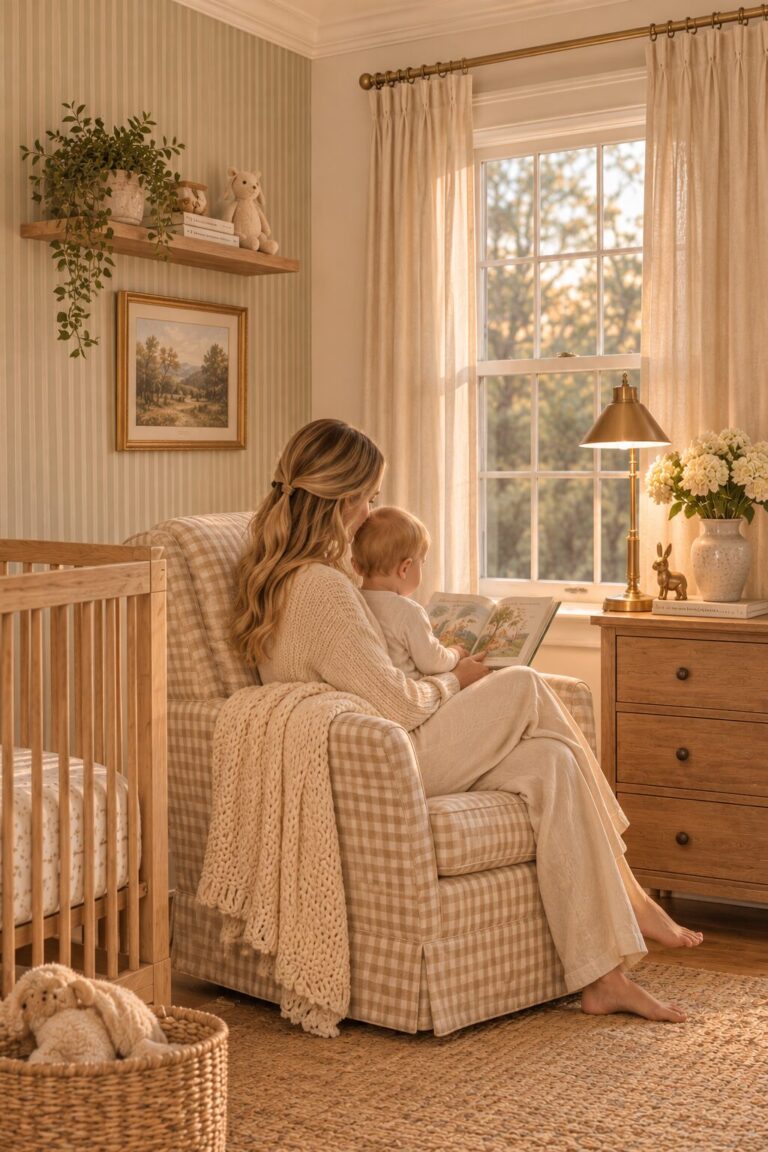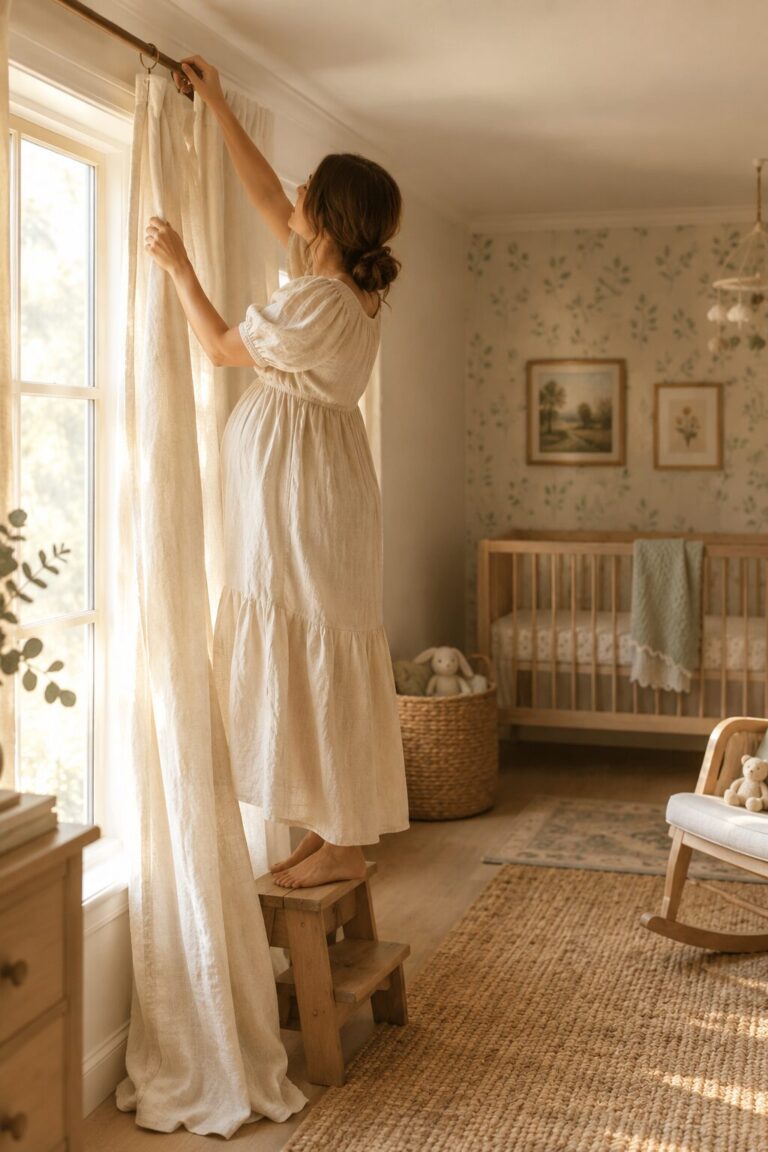
Thinking about peel and stick wallpaper for your nursery? Same. There’s something about nesting mode that makes you want to transform a plain beige room into something that actually feels like it belongs to your baby — without calling a contractor or losing a security deposit.
Removable wallpaper has come a long way from the flimsy, bubble-prone sheets you might remember. If you’re weighing whether it’s worth it, whether it’ll actually stick, or how to choose something that won’t end up looking sad six months in, this is the guide for you.
Why So Many Moms Are Choosing Peel and Stick Wallpaper for the Nursery
No contractor, no commitment, no mess
Traditional wallpaper requires paste, a steady hand, and usually a professional. Removable wallpaper requires a Sunday afternoon and a smoothing tool. That’s the entire difference. No fumes, no soaking, no dried paste crust on the baseboards.
It works especially well for renters
If you’re renting, you already know the anxiety of personalizing a space you don’t technically own. Peel and stick nursery wallpaper is genuinely renter-friendly — most quality brands peel off cleanly without pulling paint, as long as your walls are properly prepped first (more on that below).
The “I might change my mind” factor
Nursery aesthetics have a short lifespan. What feels perfect for a newborn can look a little young for a curious two-year-old. Removable wallpaper gives you the flexibility to evolve the room without a full renovation. That freedom is genuinely worth something.
But Wait: Does Peel and Stick Wallpaper Actually Hold Up?
Common concerns before buying
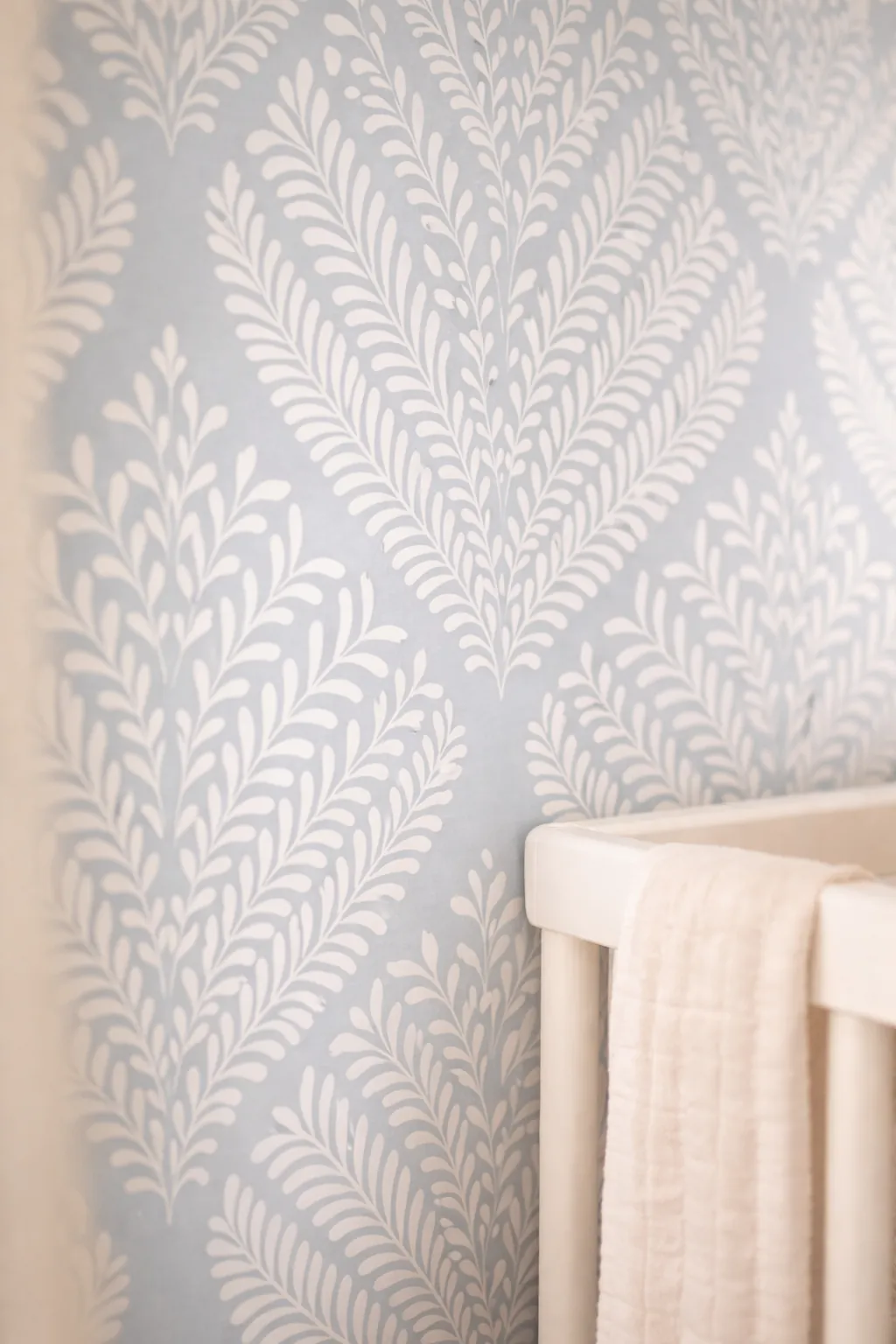
The two questions most moms ask: Will it peel off on its own? And will it ruin my walls when I remove it? Both are fair. The honest answer is: it depends on the brand, your wall surface, and whether you prep properly.
What real experience shows about durability
Mid-to-higher quality peel and stick wallpaper holds up well in low-humidity rooms like nurseries. It’s not going to slide down the wall in the middle of the night. The edges are the most vulnerable point — corners and seams can lift if the wall wasn’t clean or fully dry before application. That’s almost always a prep issue, not a product issue.
The truth about wall damage
On freshly painted walls (less than 30 days old), some paint may come off with the wallpaper. On older, fully cured paint in good condition, most removable wallpaper comes off cleanly. If your walls have any repairs, texture inconsistencies, or low-quality paint, go in with realistic expectations: a little touch-up might be needed.
Choosing the Right Peel and Stick Wallpaper for a Nursery
Matching wallpaper to your nursery aesthetic
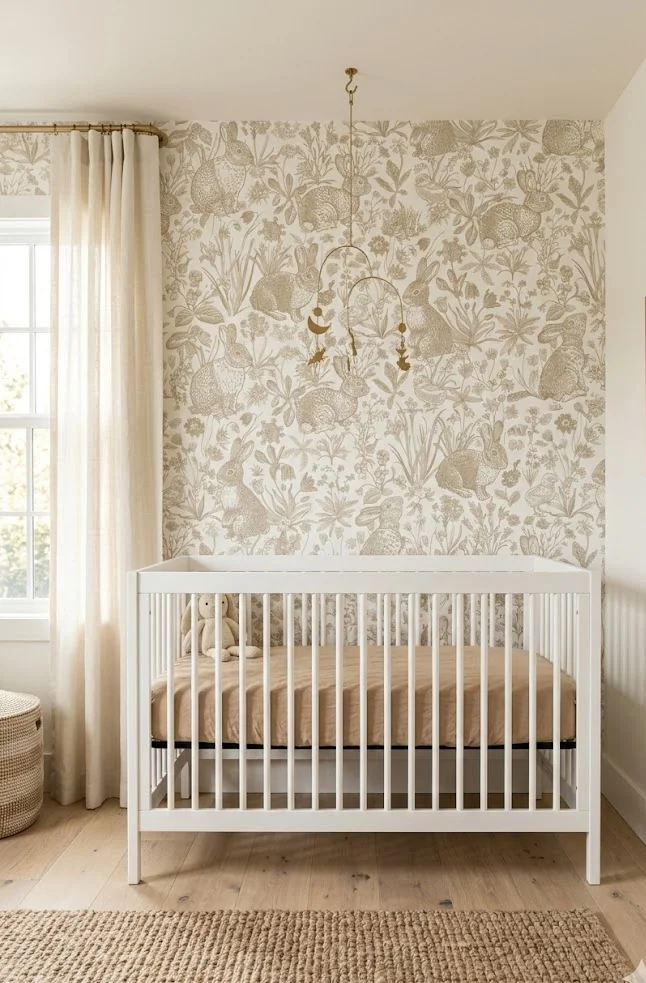
Think about the overall feeling first, then narrow to pattern. Soft watercolor botanicals work beautifully in a calm, earthy nursery. Geometric shapes in muted tones feel modern without being cold. Illustrated animals are perennial favorites — especially when the scale is right. A large-scale print can feel overwhelming in a small room, while a smaller repeat pattern tends to be more versatile.
Colors and patterns that age well
If longevity matters to you, lean toward muted palettes over saturated primaries, and illustrated prints over explicitly “baby” motifs. A soft forest scene or abstract leaf pattern can transition naturally from infant to toddler years without feeling out of place.
How much wallpaper do you actually need?
Measure wall height × width for each surface you’re covering, then add 10–15% for trimming and pattern matching. Most peel and stick wallpaper is sold by the roll, and each roll covers roughly 28–30 square feet. For a single accent wall around 8 × 10 feet (80 sq ft), you’d need three to four rolls. Always order a little extra — dye lots can vary between orders.
Best Peel and Stick Wallpaper Options for a Nursery
There are a lot of options out there. Here are a few worth looking into, depending on your style and budget:
How to Apply Peel and Stick Wallpaper in a Nursery Without Losing Your Mind
Tools you’ll need
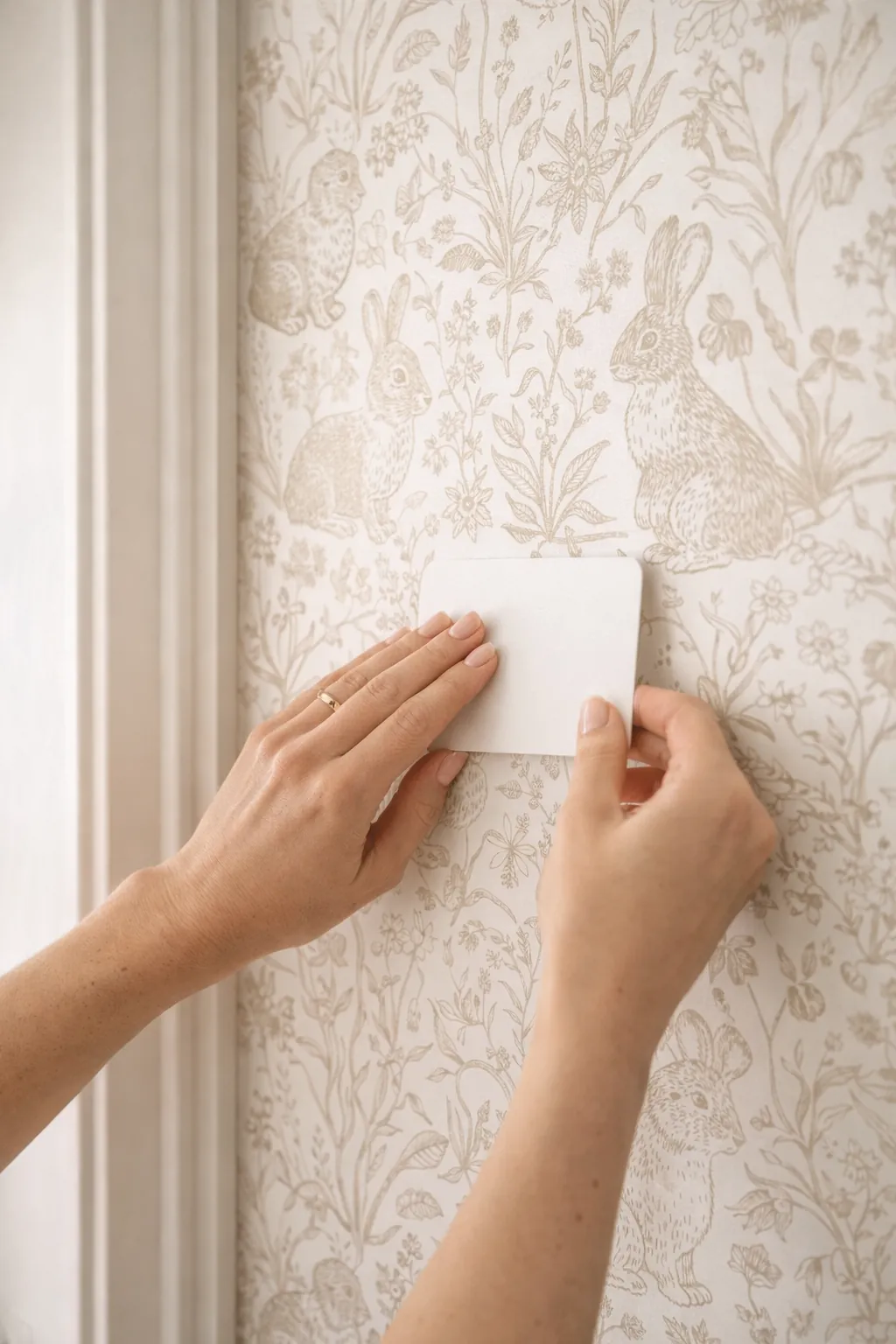
While purchasing a kit can be helpful, you don’t need much: a level, a pencil, a plastic smoothing tool (or an old credit card), a tape measure, and sharp scissors or a utility knife. That’s it. Have them all ready before you start so you’re not hunting for scissors mid-panel.
Prepping your walls — the step most people skip
Clean walls are non-negotiable. Wipe them down with a damp cloth to remove dust and any residue, then let them dry completely — at least 24 hours before applying. If you’ve recently painted, wait a full 30 days for the paint to cure. Skipping this step is the number one reason removable wallpaper fails to stick or peels prematurely.
Step-by-step application tips
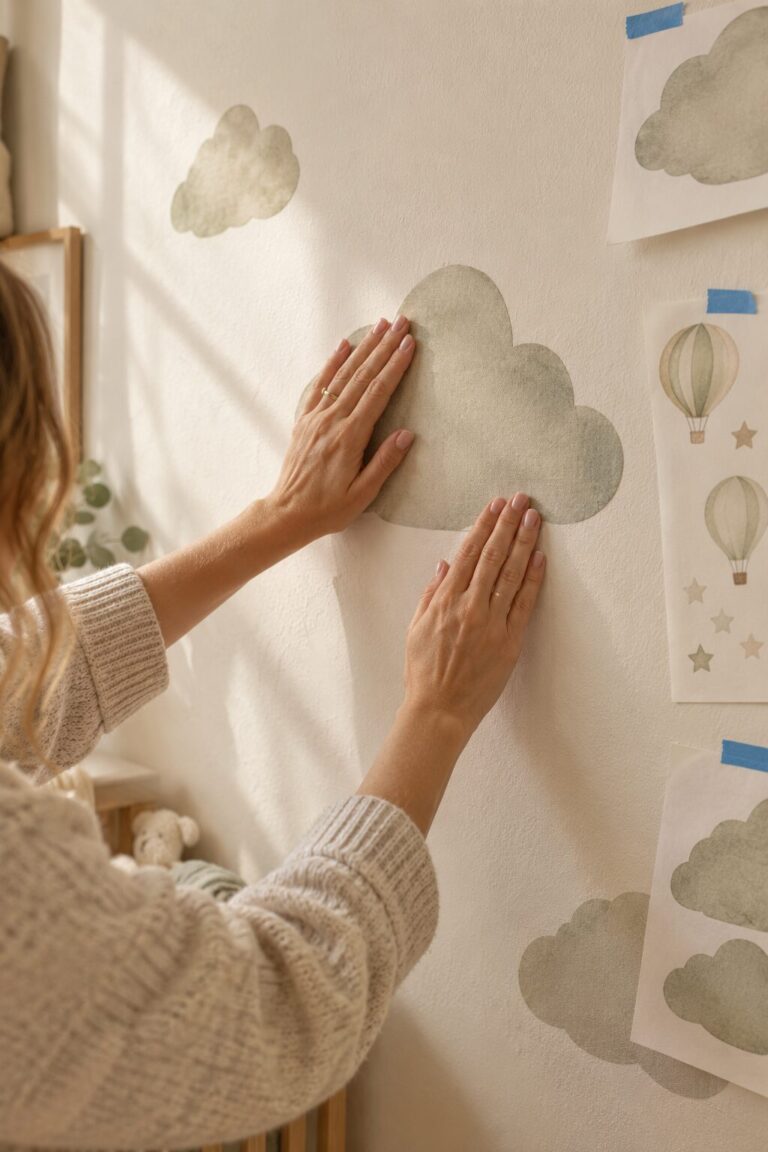
Start at the top of the wall and use your level to draw a faint plumb line — this keeps your panels straight. Peel back just the top few inches of backing to start, align to your line, and smooth downward in firm, overlapping strokes. Peel the backing as you go rather than all at once. Work slowly at the seams; slight overlapping is better than visible gaps.
The trickiest spots in a nursery
Outlets and light switches require a trim — score an X with a utility knife, fold back the flaps, and cut flush. Corners are where most bubbling happens; wrap the paper around the corner slowly and smooth as you go rather than trying to fold it all at once. Around windows, measure twice and cut generously. You can always trim more.
How to Remove Peel and Stick Wallpaper When You’re Ready for a Change
The right way to peel it off
Warm the surface gently with a hair dryer on low — about 30 seconds per section — to soften the adhesive. Then peel slowly at a low angle (almost parallel to the wall), not straight out. Rushing this is where damage happens. The slower you go, the cleaner the removal.
If residue or paint comes with it
A little adhesive residue is normal. Rub it gently with a damp cloth or a small amount of rubbing alcohol on a rag — it should lift without much effort. For paint that’s come off in patches, a small touch-up with matching paint will sort it. It’s rarely as dramatic as it looks in the moment.
Nursery Wallpaper Ideas to Inspire You
Accent wall only vs. full room
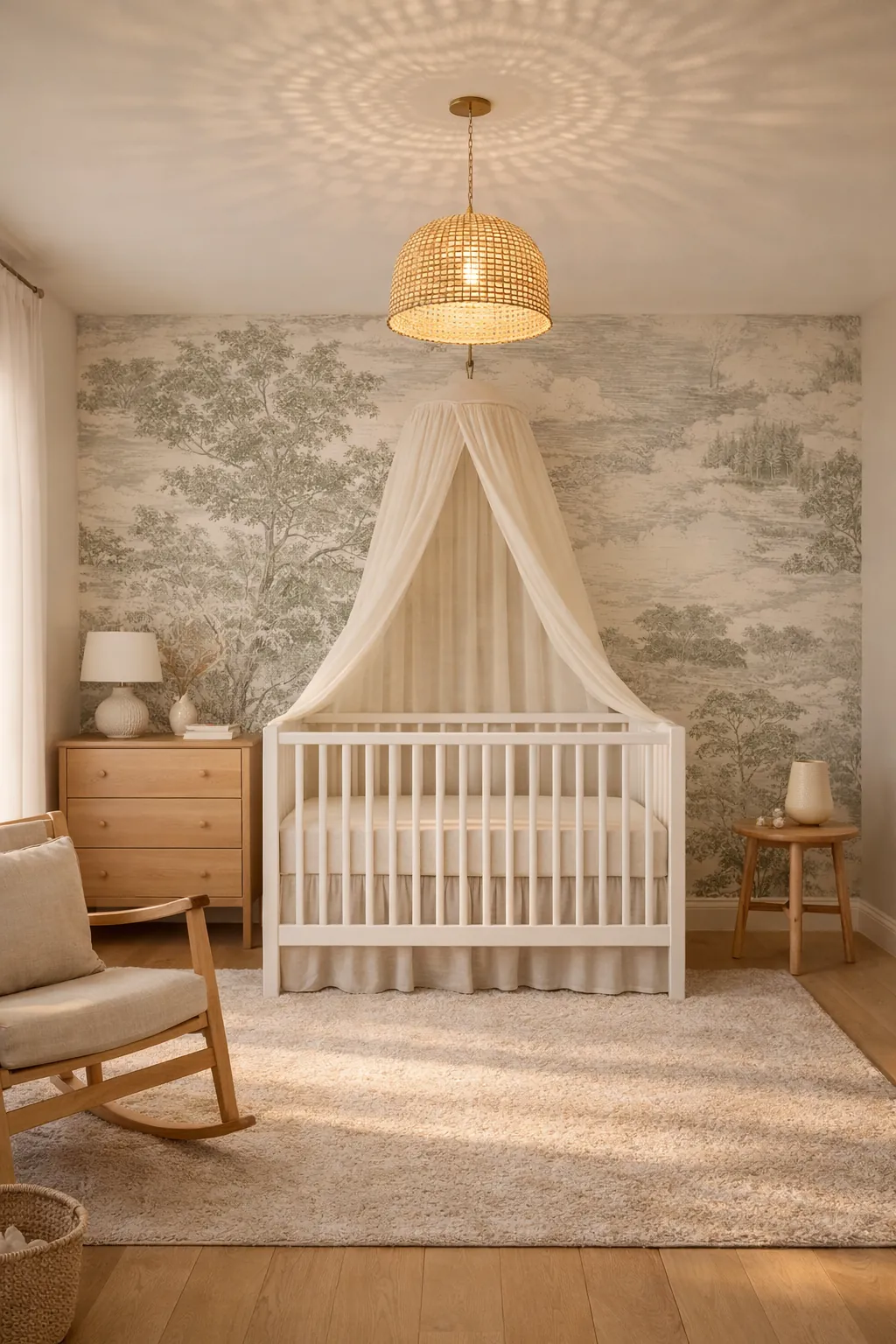
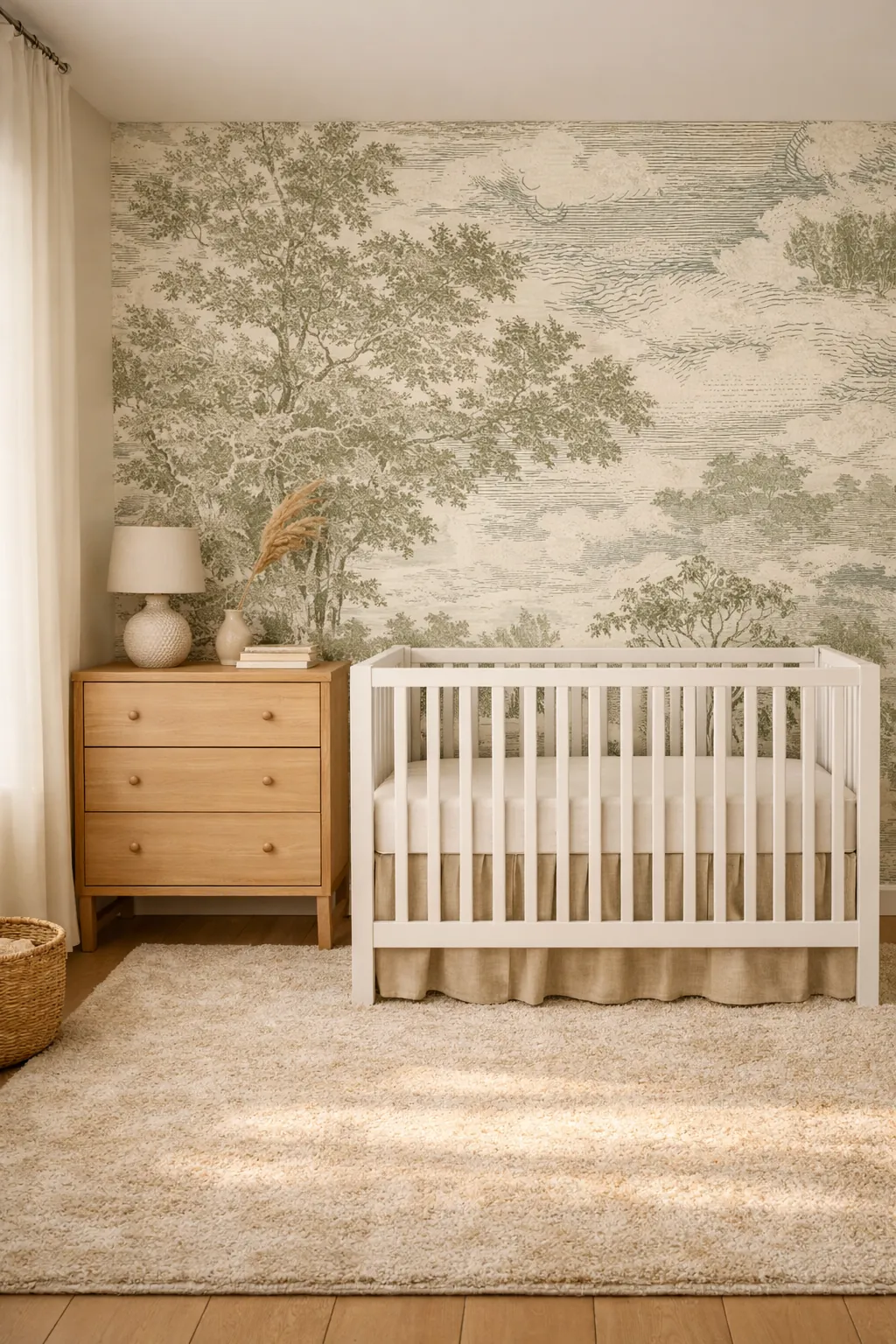
An accent wall — typically the one behind the crib — is the most popular approach, and for good reason. It creates a visual focal point without overwhelming a small space, uses less material, and is faster to apply. Full-room wallpaper looks stunning when done well, but it requires more precision and more patience. If it’s your first time, start with one wall.
Ceiling wallpaper — worth it?
A wallpapered nursery ceiling, one of Good Housekeeping’s top 2026 wallpaper trends, is unexpected and genuinely lovely. It’s more physically demanding to apply (hello, aching arms), so having a second person helps enormously. If you want the impact without the full commitment, even a half-ceiling or a cloud cluster near the crib creates something special.
Mixing wallpaper with other decor
Let the wallpaper lead and build around it. Pull one or two colors from the print into your textiles — the crib sheet, a rug, the curtains. Keep the furniture relatively neutral so it doesn’t compete. The wallpaper is the statement; everything else supports it.
Is Peel and Stick Wallpaper Right for Your Nursery?
If you want a nursery that feels intentional without a renovation budget, removable wallpaper is genuinely one of the best tools you have. It’s forgiving, it’s flexible, and when it’s done well, it looks nothing like a shortcut.