If you’re reading this because you’ve experienced miscarriage, I’m so sorry. And if you’re reading this because someone you love has, I’m glad you’re here, too. This post is for both of you.
I’ll be honest: this isn’t the kind of content you typically find on Raising Well. Our topics are upbeat, centering on how to build a beautiful, intentional life for your family. But miscarriage is a motherhood topic. It is a family topic. Whether a child lives three days or months in the womb, or three years earthside, that life matters and deserves to be acknowledged. I believe that with my whole heart because I’ve lived it.
What No One Tells You About Pregnancy Loss

There is a particular kind of heartbreak that comes from seeing your baby and their heartbeat—small and fast and impossibly real—and then showing up to your next appointment to find that the baby has passed. The silent stillness on the ultrasound screen is something you never forget.
What follows that silence is a blur. The doctor explains your options and next steps. You have to make these medical decisions almost immediately, while shock robs you of your ability to think rationally. For many, follow-up appointments and bloodwork are a lingering reminder of the physical loss—a dark shadow over the days and weeks that follow.
It is a nightmare you don’t wake up from. It follows you into the grocery store, into your Instagram feed, into weddings, birthday parties, and baby showers. Grief after miscarriage is not linear, and it is not brief. No matter your individual miscarriage experience, please know that what you are feeling is real, it is valid, and you are allowed to grieve as fully as you need to.
Bible Verses for Miscarriage That Brought Me Comfort
I have been turning to scripture a lot during my loss, sometimes desperately, sometimes quietly. Here are a few of the passages that meant the most to me.
Psalm 73:26 (NIV)

“My flesh and my heart may fail, but God is the strength of my heart and my portion forever.”
When your body and heart feel shattered, this verse serves as a reminder that you don’t have to keep it all together: God will do that.
Psalm 139:13–16 (NIV)

“For you created my inmost being; you knit me together in my mother’s womb. I praise you because I am fearfully and wonderfully made; your works are wonderful, I know that full well. My frame was not hidden from you when I was made in the secret place, when I was woven together in the depths of the earth. Your eyes saw my unformed body; all the days ordained for me were written in your book before one of them came to be.”
I hope this passage gives you peace about your child. God knows that little life. He saw it and ordained every single one of his or her days, even if those days were fewer than you ever wanted them to be. That baby was not a mistake or an accident. He or she is known and loved by the Creator before they were ever known by you.
Revelation 21:3–4 (NIV)
“And I heard a loud voice from the throne saying, ‘Look! God’s dwelling place is now among the people, and he will dwell with them. They will be his people, and God himself will be with them and be their God. He will wipe every tear from their eyes. There will be no more death or mourning or crying or pain, for the old order of things has passed away.’”
On the days when grief feels endless, remember that death doesn’t have the final word. There is a place where every tear gets wiped away. Rest in knowing that your baby is already there.
Isaiah 41:10 (NIV)
“So do not fear, for I am with you; do not be dismayed, for I am your God. I will strengthen you and help you; I will uphold you with my righteous right hand.”
This verse doesn’t promise that the pain will disappear. What does God promise? That you won’t have to face it alone.
1 Corinthians 13:12 (NIV)
“For now we see only a reflection as in a mirror; then we shall see face to face. Now I know in part; then I shall know fully, even as I am fully known.”
There are so many questions that miscarriage can leave unanswered. Why did this happen? Why now? Will I ever understand? Allow this verse to give you permission to sit with the not-knowing. One day, you will know fully. For now, you are held by the One who already does.
Tips for Grieving a Miscarriage

These suggestions come from my own experience and from conversations with other women who have walked this road. There is no right way to grieve, but these things helped me, and they may be helpful for you, too.
Create a memory box or other ritual to remember your child
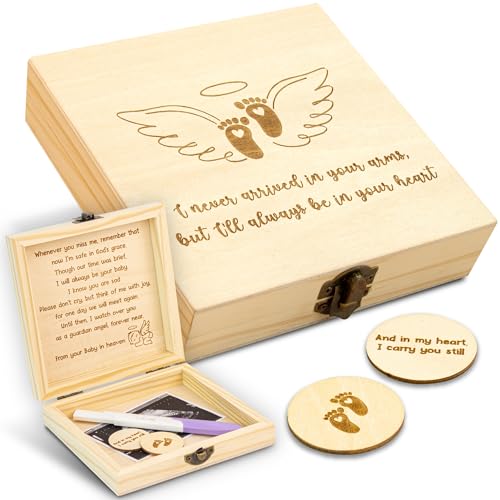
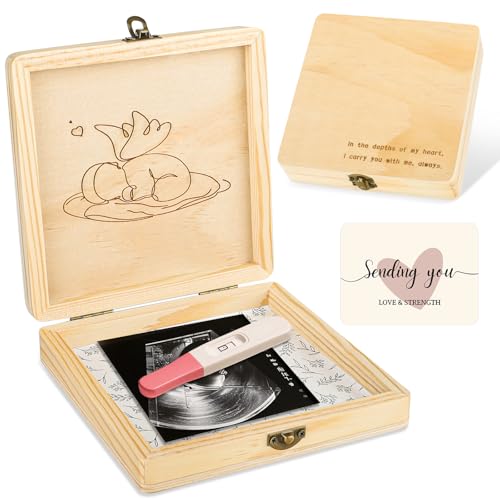
Even if the world around you didn’t get to witness it for very long, your baby’s life deserves to be honored. A memory box is a quiet, private way to do that. Mine—a gift from my mother—holds our baby boy’s ultrasound photo and a small prayer cross. Some women include a poem they wrote, a tiny onesie they had already bought, a hospital bracelet, a letter to their baby. There is no rule here. Let it hold what matters to you.
Set aside time to grieve
In the early days, grief doesn’t ask permission. It just arrives. At first, the crying is constant. Over time, something shifts. The waves come less frequently, but they can still knock you over when you least expect it: a due date that passes quietly, a pregnancy announcement from a friend, a random Tuesday when it all just hits. Giving yourself intentional time and space to grieve, even when things start to feel more manageable, matters. Some women journal. Some pray. Some light a candle and sit quietly. Let yourself feel it, rather than push through it.

- Created with Licensed Therapists: This guided miscarriage journal was created in partnership with licensed therapists to help you process loss in a safe and healthy way.
Be kind to yourself
It is okay to set boundaries: To skip the baby shower. To leave the party early. To decline the invitation you just aren’t ready for yet. Protecting your heart in the early days of grief is not weakness, it’s wisdom. Over time, you will gradually start to feel ready again. You’ll say yes to things and mean it. For now, give yourself permission to pull back for as long as you need to.
Consider reading about grief and loss
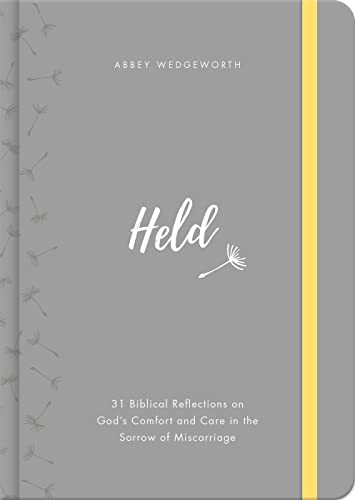
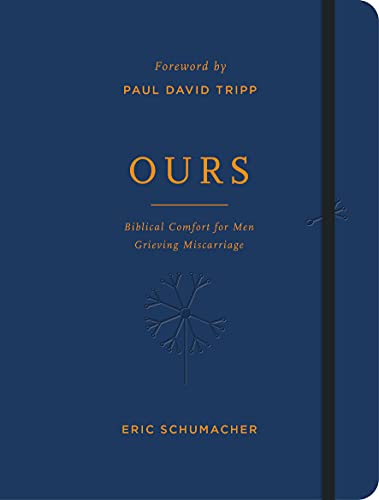
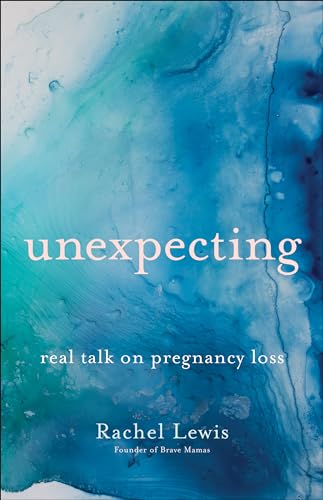
There is something deeply comforting about reading words written by someone who understands—whether that’s a book about pregnancy loss, a devotional, or a memoir. It can make you feel less alone in a season when loneliness is one of the loudest feelings. These books and devotionals offer language for what you are experiencing when your own words run out.
How to Support Someone Who Has Had a Miscarriage
If someone you love is going through this, you might be at a loss for what to do or say. That’s okay. The most important thing is that you show up — imperfectly, honestly, and consistently.
Say something
It can be hard to know what to say when someone loses a pregnancy. Many people say nothing out of fear of saying the wrong thing—and that silence, however unintentional, can feel like erasure. You don’t have to have the right words. “I’m so sorry. I love you. I’m here.” is enough. Acknowledging the loss matters more than saying it perfectly.
Let actions do the talking
When words feel inadequate, do something. Drop off a meal. Send a grocery delivery. Offer to help with kids or errands. Text to say you’re thinking of them—not just once, but in the weeks that follow, when the rest of the world has moved on and the grieving person is still very much in the thick of it. Small, consistent acts of love mean more than you know.
Don’t try to fix it
Resist the urge to offer silver linings: “At least it was early.” “Everything happens for a reason.” “I’m sure you’ll have a healthy baby soon.” These phrases, even when well-meaning, ultimately minimize the loss. What a grieving mother needs is not a reason, but rather to be heard. Ask how she’s doing and simply listen.
Remember the dates that matter
Mother’s Day is hard. The dates of would-have-been doctor’s appointments and other pregnancy milestones are hard. The anniversary of the loss is hard. A simple message on those days can mean the world. It tells her that her child is not forgotten—that someone else remembers too.
Point her toward support if she needs it
Grief after pregnancy loss can be profound and lasting. If your friend or loved one is really struggling, gently encourage her to seek support, whether that’s a counselor, a support group, or a site like Postpartum Support International’s pregnancy loss resources, which offers guidance and connection for women navigating loss and grief in pregnancy and postpartum.
You Are Not Alone
Miscarriage is one of the loneliest griefs, in part because so much of it happens invisibly. The world keeps moving, and you are standing still, holding a loss that most people around you may not even know about.
But you are not alone. There are women all around you who have walked this and made it through—not unchanged, but through. There is a God who saw your baby before you did, who ordained every one of its days, and who is close to the brokenhearted. And there are words, written thousands of years ago, that somehow still know exactly what you need to hear.
I hope the Bible verses for miscarriage in this post find you in whatever moment you’re in right now. I hope they do for you what they have for me.
Frequently Asked Questions
What is a missed miscarriage?
A missed (or silent) miscarriage is when the baby has died in the womb but the body has not yet recognized the loss or begun to miscarry naturally. There is usually no bleeding, no cramping, no outward sign that anything is wrong. For many women, the loss is discovered only at a routine ultrasound appointment, when there is no heartbeat where there should be one. Please know that any form of miscarriage is not your fault. It is not something you caused, missed, or could have prevented.
Is it normal to feel numb after a miscarriage?
Yes, completely. Numbness is a very common initial response to pregnancy loss. Your mind and body are processing something traumatic, and shock often comes before grief. It doesn’t mean you didn’t love your baby—it means your nervous system is protecting you while it adjusts to an unbearable reality. Give yourself time, and don’t rush yourself toward any particular emotion.
What do you say to someone who just had a miscarriage?
Simple and honest is always better than perfectly crafted. “I’m so sorry for your loss” is enough. You can add “I love you,” “I’m here,” or “I don’t know what to say, but I don’t want you to feel alone.” Avoid minimizing phrases like “at least it was early” or “you can always try again.” Just acknowledge the loss and the love.
How long does grief after miscarriage last?
There is no set timeline. Some women feel more like themselves within a few months; for others, grief revisits for years—around due dates, anniversaries, or major milestones. That is not a sign that something is wrong with you. It is a sign that you love your baby. If your grief is significantly impacting your daily functioning for an extended period, it may be worth talking to a counselor or therapist.
─────────────────────────────────────────
Disclosure: This post contains affiliate links. If you purchase through these links, I may earn a small commission at no extra cost to you. Thank you for supporting Raising Well!
─────────────────────────────────────────