The first warm day of the season has a way of sneaking up on you. One minute you are packing the diaper bag, and the next you are standing in the sunscreen aisle trying to figure out why a product marketed for babies contains chemical filters linked to hormone disruption. It is a lot to process, especially when you are also remembering snacks, sunhats, and whether the stroller is in the car.
Non-toxic baby sunscreen does not need to be complicated, but it does require a little more discernment than reaching for the most familiar brand on the shelf. The good news is that the clean sunscreen space has genuinely matured in recent years. There are excellent mineral options available today that go on smoothly, provide real protection, and are formulated without the ingredients that give conscientious parents pause.
This guide covers what to look for in a non-toxic baby sunscreen, why mineral formulas are the gold standard for young skin, and the specific picks worth keeping in your diaper bag all season long.
Why Mineral Sunscreen Is the Right Choice for Babies

Sunscreens fall into two broad categories: mineral (also called physical) and chemical. Chemical sunscreens work by absorbing UV radiation through a chemical reaction on the skin. The ingredients doing this work, most commonly oxybenzone, octinoxate, octisalate, and homosalate, absorb into the bloodstream in measurable amounts. The FDA has flagged several of them as requiring further safety testing, and some, particularly oxybenzone, have been associated with hormone disruption in studies on both humans and marine ecosystems.
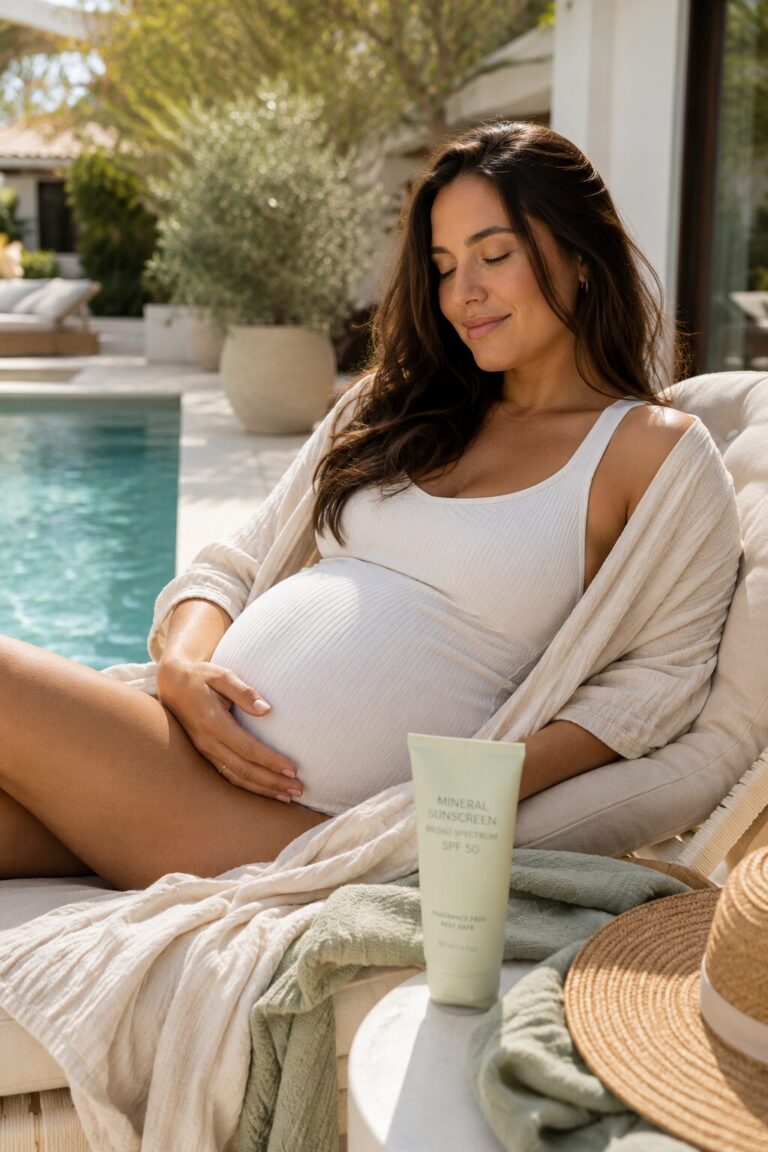
Mineral sunscreens work differently. Zinc oxide and titanium dioxide sit on top of the skin and physically scatter and absorb UV rays rather than converting them through a chemical reaction. They do not absorb into the bloodstream in any meaningful way, they provide broad-spectrum protection against both UVA and UVB rays when zinc oxide is the active ingredient, and they are generally well-tolerated by even the most reactive skin. For baby skin, which is thinner and more permeable than adult skin, the choice to go mineral is an easy one.
When selecting a mineral sunscreen, look for non-nano zinc oxide specifically. Non-nano means the zinc particles are large enough that they cannot penetrate the skin barrier, which is the safest profile for infants and young children. The EWG Sunscreen Guide is updated annually and rates more than 2,200 products on both safety and efficacy, making it one of the most useful free tools for evaluating any sunscreen before you buy.
What to Look for in a Non-Toxic Baby Sunscreen
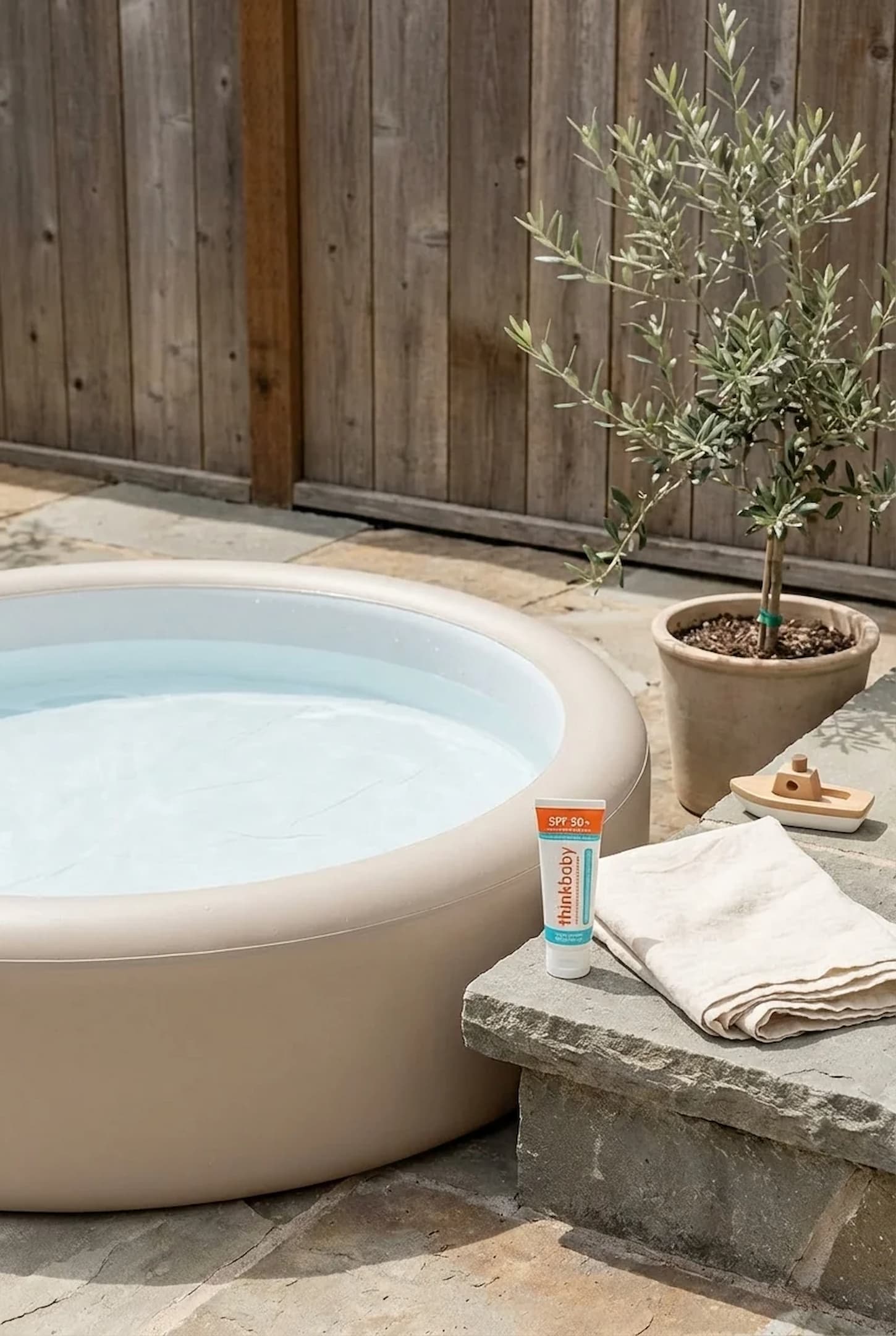
Beyond mineral-only active ingredients, there are a few additional markers worth prioritizing when choosing a sunscreen for your baby. SPF 30 to 50 is the sweet spot recommended by most pediatric dermatologists for daily and recreational use. Below SPF 30 leaves more room for error; above SPF 50 offers diminishing returns and often contains higher concentrations of active ingredients.
Water resistance matters more than parents often realize. Look for formulas that specify water resistance of 40 or 80 minutes if your baby will be near water or sweating, and always reapply after swimming or toweling off regardless of the label claim. Fragrance-free is worth seeking out for newborns and babies with sensitive or eczema-prone skin, since fragrance, even natural fragrance, is one of the most common triggers for contact dermatitis in young children.
Third-party certifications add a meaningful layer of trust. EWG Verified, Leaping Bunny Certified, NSF/ANSI 305 Certified, and the National Eczema Association Seal of Acceptance all require brands to meet independently verified standards. Products carrying these certifications are doing more than making marketing claims.
One practical note: all mineral sunscreens have some degree of white cast because of how zinc oxide works. Some formulas blend in more easily than others. Warming the product between your palms before applying, and using circular motions on the skin, helps considerably. If white cast is a concern for older children, a tinted mineral option can minimize the effect while maintaining clean credentials.
The Best Non-Toxic Baby Sunscreens

Earth Mama Baby Mineral Sunscreen Lotion SPF 40
Earth Mama’s mineral sunscreen line is among the most thoroughly certified available. The Earth Mama Baby Mineral Sunscreen Lotion SPF 40 is rated as one of EWG’s best recreational and baby sunscreens, Leaping Bunny Certified, and pediatrician, dermatologist, and clinically tested for irritation. The active ingredient is 25% non-nano zinc oxide, and the base includes organic coconut oil, organic red raspberry seed oil, organic pomegranate seed oil, organic jojoba, organic shea butter, and calendula extract. Formulated without chemical sunscreens, artificial fragrance, or dimethicone, it is water resistant for 40 minutes and genuinely safe from birth. Earth Mama also makes a companion face stick, which is ideal for wriggly babies who resist lotion application around the nose and cheeks.

- EWG VERIFIED MINERAL SUNSCREEN: Formulated to protect sensitive skin of all ages without chemical sunscreens, artificial fragrance, or dimethicone
Earth Mama Uber-Sensitive Mineral Sunscreen Lotion SPF 40
For babies and toddlers with eczema-prone or extra reactive skin, Earth Mama’s Uber-Sensitive Mineral Sunscreen Lotion is the more targeted option. It has earned the National Eczema Association Seal of Acceptance and holds the same EWG top rating as the standard formula. The key addition is organic colloidal oatmeal, which provides a soothing, barrier-supporting base specifically suited to skin that flares easily. Same non-nano zinc oxide active ingredient, same clean certification stack, with a formula built for the most sensitive skin in your family.
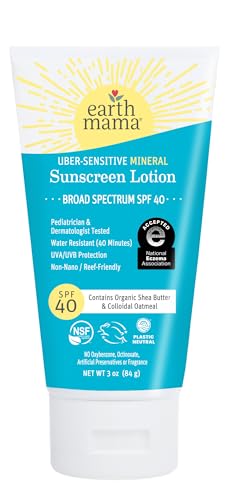
- SAFE FOR SENSITIVE SKIN: Awarded the Seal of Acceptance by the National Eczema Association for meeting its standards; Formulated with non-nano zinc, organic shea butter, and organic colloidal oatmeal to help soothe sensitive, rash-prone skin
Badger Baby Mineral Sunscreen Cream SPF 40
Badger is one of the original clean sunscreen brands, and their baby formula is a benchmark for ingredient simplicity. The Badger Baby Mineral Sunscreen Cream SPF 40 contains just seven ingredients: non-nano zinc oxide, organic sunflower oil, organic beeswax, organic chamomile, organic calendula, organic seabuckthorn, and sunflower vitamin E. It is 98% organic, made in a 100% solar-powered facility, B Corporation certified, reef-safe, and EWG rated. The chamomile and calendula give it a gentle, botanical scent that is light and calming rather than overpowering. Water resistant for 40 minutes and pediatrician tested, this is as close to “just the good stuff” as baby sunscreen gets.
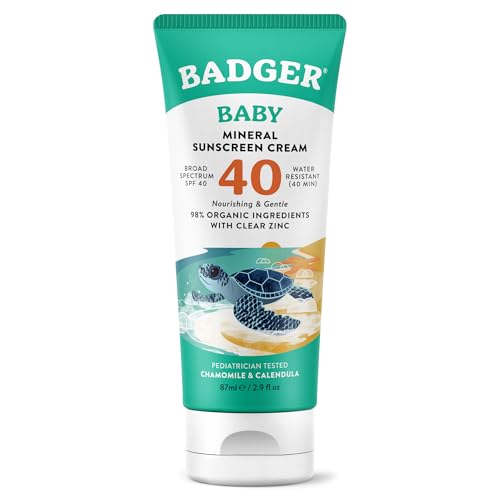
- 98% ORGANIC & SIMPLE INGREDIENTS: Formulated with just 7 ingredients including non-nano zinc oxide, organic sunflower oil, and soothing chamomile. This clean mineral sunscreen is a diaper bag essential for pure skin care for kids and babies.
Thinkbaby SPF 50+ Baby Sunscreen
Thinkbaby was the first baby sunscreen to pass Whole Foods Premium Care requirements, and it has remained one of the most trusted names in clean sun protection since. The Thinkbaby SPF 50+ Baby Sunscreen uses 20% non-nano zinc oxide as its active ingredient and is free from oxybenzone, avobenzone, PABA, parabens, phthalates, BPA, petroleum, gluten, and dairy. Leaping Bunny Certified and reef-safe, it offers the highest water resistance available, 80 minutes, which makes it the right choice for pool days, beach trips, and anything involving a water table and a determined toddler. At SPF 50+, it is also one of the higher-protection options in the clean sunscreen category.
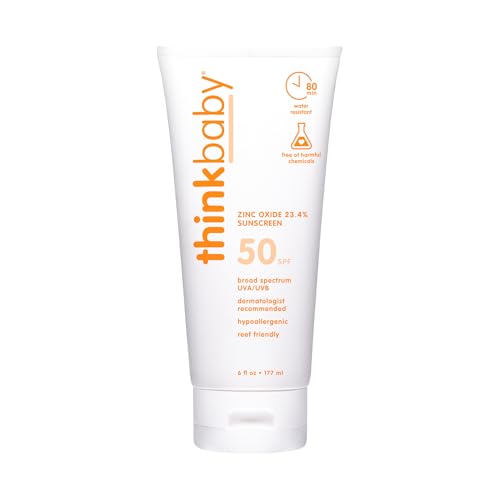
- SAFE, NATURAL PROTECTION: Thinkbaby sunscreen provides effective SPF 50+ sun protection for babies. The broad spectrum UVA & UVB kid sunscreen is suitable for daily use on infants’ sensitive skin, offering gentle defense against the sun’s rays
Babo Botanicals Sensitive Baby Mineral Sunscreen Lotion SPF 50
Babo Botanicals consistently earns top marks from the EWG and has built a strong reputation among parents of children with sensitive and allergy-prone skin. Their Sensitive Baby Mineral Sunscreen Lotion SPF 50 is EWG Verified, B Corp Certified, fragrance-free, and free from gluten, soy, dairy, peanut, almond, and walnut, making it one of the most allergy-conscious formulas available. It is water resistant for 80 minutes, vegan, and pediatrician tested. The zinc oxide formula goes on without a heavy white cast relative to many mineral options, and the base includes their organic Nutri-Soothe complex with skin-calming botanical oils. A strong all-rounder for babies with sensitive or reactive skin.
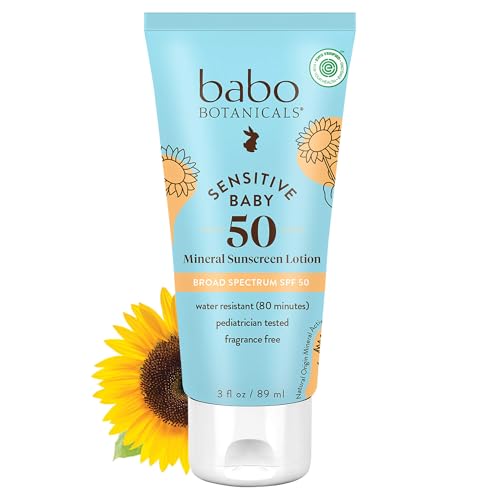
- GOOD FOR YOUR BABY: A fast-absorbing, non-whitening and lightweight sunblock for very sensitive skin. Water resistant and perfect for babies.
Babo Botanicals Sensitive Baby Mineral Sunscreen Stick SPF 50
The stick format from Babo Botanicals deserves its own mention because it solves one of the most common real-world sunscreen problems: a baby who will not stay still for lotion application. The Babo Botanicals Sensitive Baby Mineral Sunscreen Stick SPF 50 has the same EWG Verified, NSF Certified, Made Safe Certified credentials as the lotion, with a 70% organic ingredient base and 80 minutes of water resistance. Fragrance-free, zinc oxide only, and easy to swipe across cheeks, ears, and the tops of little feet without a wrestling match. A good addition to the diaper bag alongside a full-body lotion for at-home application.

- Lightweight mineral baby sunscreen stick
Mustela Baby Mineral Sunscreen Lotion SPF 50
Mustela is a brand pediatric dermatologists have trusted for decades, and their mineral sunscreen lotion is a natural extension of their baby skincare line. The Mustela Baby Mineral Sunscreen Lotion SPF 50 is fragrance-free, water resistant for 80 minutes, and formulated for sensitive skin from birth. Mustela also makes a companion mineral sunscreen stick at SPF 50 that is EWG Verified and particularly popular with parents for easy on-the-go reapplication. If you already use Mustela for your baby’s lotion or wash, this sunscreen fits seamlessly into the same clean routine.
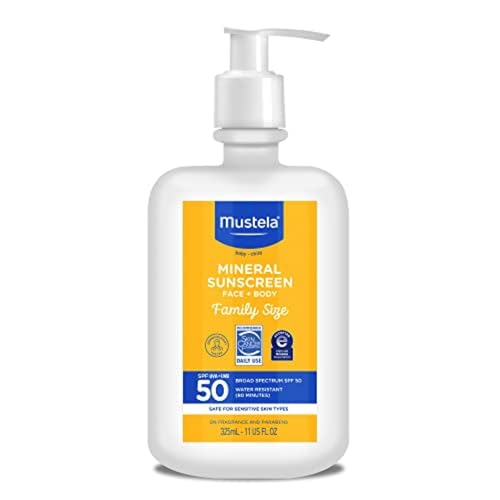
- Mineral baby-safe sunscreen for face and body. Safe for sensitive and eczema-prone skin.
How to Apply Baby Sunscreen the Right Way
The American Academy of Pediatrics recommends keeping babies under six months out of direct sunlight altogether, using protective clothing, hats, and shade as the primary defense. For babies over six months, a mineral sunscreen applied 15 minutes before sun exposure is the appropriate next layer of protection.
Apply more than you think you need. The most common sunscreen mistake is underapplication, which can reduce the SPF protection significantly. A rough guide is about a teaspoon for the face and neck, and enough to fully cover all exposed areas of the body without rubbing completely invisible. Reapply every two hours, and immediately after swimming, sweating heavily, or toweling off, even if the formula claims water resistance.
For the face, sticks and small-tipped applicators make the process much more manageable on a moving baby. Apply to the face first while you still have their attention, then move to the body. Warming the lotion between your palms for ten seconds before applying reduces white cast and makes rubbing in easier. Ears, the tops of feet, and the back of the neck are commonly missed spots worth a second pass.
Sun protection is always most effective as part of a layered approach. A wide-brimmed hat, a long-sleeved rash guard, and seeking shade during peak hours between 10am and 2pm will do more than any sunscreen alone. Sunscreen fills in the gaps, but it works best alongside, not instead of, other protective measures.
Making Non-Toxic Sun Protection Part of a Bigger Picture
Sunscreen is one touchpoint in a larger framework of what your baby comes into contact with every day. If you are actively working to reduce chemical exposure in your household, the products used most frequently on baby’s skin are the highest-leverage places to start. The complete guide to non-toxic baby products covers the full picture, from diapers to skincare to cleaning products, for anyone building out a cleaner home from scratch.
For everyday skin care alongside sun protection, the guide to non-toxic baby lotion for sensitive skin covers the best clean moisturizers for after bath time and daily hydration. And if you are rethinking your baby’s bath routine entirely, the best non-toxic baby wash and shampoo walks through the cleanest options for bath time.
It is also worth noting that what you wash your baby’s clothing and towels in matters too, since fabrics sit against their skin all day. The best non-toxic baby laundry detergent guide covers the safest options there.
Final Thoughts
Non-toxic baby sunscreen is not a compromise. The mineral formulas available today are well-formulated, genuinely effective, and increasingly easy to apply. You do not have to choose between protecting your baby from the sun and protecting them from the chemicals in their sunscreen.
If you are starting out, the Earth Mama Baby Mineral Sunscreen Lotion or Thinkbaby SPF 50+ are excellent all-purpose picks with strong certification records. For sensitive or eczema-prone skin, the Earth Mama Uber-Sensitive or Babo Botanicals SPF 50 lotion offer additional reassurance. And for everyday on-the-go use, a mineral stick like the Babo Botanicals version is the kind of thing you will pull out of your bag ten times over the course of a summer.
A hat, some shade, and one of these sunscreens. That is a solid foundation for a safe season in the sun.
Frequently Asked Questions
When can I start using sunscreen on my baby?
The American Academy of Pediatrics recommends keeping babies under six months of age out of direct sunlight and relying on protective clothing, hats, and shade as the primary strategy. For babies over six months, a mineral sunscreen with zinc oxide is appropriate. If sun exposure is unavoidable for a baby under six months, a small amount of mineral sunscreen on exposed areas is preferable to no protection at all, but consult your pediatrician first.
What is the difference between mineral and chemical sunscreen?
Mineral sunscreens use zinc oxide or titanium dioxide as active ingredients, sitting on top of the skin and physically deflecting UV rays. They provide immediate protection and do not absorb into the bloodstream in meaningful amounts. Chemical sunscreens use synthetic filters like oxybenzone and octinoxate, which absorb UV rays through a chemical reaction on the skin. Several chemical filters absorb into the bloodstream and have raised concerns about hormone disruption. For babies, mineral-only formulas are the safer choice.
What does non-nano zinc oxide mean?
Zinc oxide comes in different particle sizes. Nano particles are small enough to potentially penetrate the skin barrier, while non-nano particles are large enough to sit on the surface without being absorbed. For babies and young children, non-nano zinc oxide is the preferred choice because it offers the same UV protection without the theoretical concern about systemic absorption. Most reputable clean baby sunscreens now specify non-nano on their labels.
How much sunscreen do I need to apply to my baby?
Most parents significantly underapply sunscreen, which reduces protection substantially. A rough guide is about a teaspoon for the face and neck combined, and enough to fully cover all exposed skin on the body. If you can rub it completely invisible immediately, you have likely applied too little. Reapply every two hours, and always reapply after swimming, heavy sweating, or toweling off, regardless of the water resistance rating.
Does my baby still need sunscreen if we are mostly in the shade?
Shade significantly reduces direct UV exposure but does not eliminate it. UV rays reflect off sand, water, concrete, and light-colored surfaces, and can reach skin even under an umbrella or canopy. Sunscreen is still recommended on exposed skin when outdoors for extended periods, even in shaded conditions. Protective clothing and wide-brimmed hats remain the most reliable first line of defense and should be used alongside sunscreen rather than instead of it.
Disclosure: This post contains affiliate links. If you purchase through these links, I may earn a small commission at no extra cost to you. Thank you for supporting Raising Well!